

Pool Building Insights From Northern Virginia's Custom Gunite Experts
The Custom Pool Education You've Been Looking For.
How Long Does It Take to Build a Gunite Pool?
| Quick Answer: From the first conversation to finished water, a custom gunite pool in Northern Virginia typically takes four to six months. Design and permitting alone can run ten to sixteen weeks or more before construction begins. Construction, once underway, typically runs eight to twelve weeks depending on the scope of the project, site conditions, and weather. If you want to swim in a specific summer season, the planning process needs to start the fall or winter before that season. |
This is one of the most common questions I get from homeowners who are at the beginning of the process. And it makes complete sense to ask. You are planning a significant project, you are thinking about your summer, and you want to know what you are working with.
The honest answer is that it depends on several things. But rather than leaving it there, I want to walk you through what actually drives the timeline and give you a realistic picture of what each phase involves.
When Should I Start Planning a Pool to Be Ready by Summer?
If you want to be in the water by summer, the planning process needs to start in the fall or early winter of the previous year. That is not a cushion recommendation. It is a practical requirement once you understand how the phases sequence.
Design takes time. Permit review in Northern Virginia runs six to ten weeks or more, and spring submissions wait in a long queue. Construction runs eight to twelve weeks on its own. Add those up and the math makes the answer clear: a summer pool that starts planning in spring is almost never achievable for a custom gunite build.
The homeowners who have the best experience are almost always the ones who planned early. If you are reading this in early spring and have not yet started, reach out and let us look at your specific situation. Depending on the scope and your county, there may be options worth exploring.
How Long Does the Design Phase Take?
The design phase typically runs two to four weeks for a standard project, and longer for designs with more complexity, elevation changes, or integrated features like water features or outdoor structures. This is where the pool shape, size, depth profile, finishes, and equipment are determined.
The design phase is worth doing carefully. Changes made on paper are simple. Changes made during construction are costly and create delays. Investing the right amount of time here before anyone touches your yard is always the better approach.
How Long Does Pool Permit Review Take in Northern Virginia?
Permit review is the phase that most significantly affects the overall timeline, and the one that surprises homeowners most.
In Prince William County, permit review typically runs six to ten weeks. During spring, when pool permit applications surge across the region, review times can stretch beyond that. Fauquier County timelines vary based on current workload and plan complexity.
Once a permit application is submitted, county review moves at its own pace. There is no way to speed up the jurisdiction’s process from the outside. The best way to manage this phase is to get applications in early, before the spring volume builds.
Homeowners who submit permit applications in December or January consistently have a better timeline experience than those who submit in March or April.
How Long Does Pool Excavation Take?
Excavation typically takes three to seven days depending on the size of the pool and the conditions of the site. Clay-heavy soil, which is common across Prince William and Fauquier counties, is denser and heavier to move than sandy or loamy soil. The occasional presence of subsurface rock can also affect how excavation proceeds and how long it takes.
Equipment access is another factor. Properties where heavy machinery has limited access to the rear yard may require additional planning around how excavation proceeds.
How Long Do the Steel and Plumbing Phases Take?
After excavation, the structural steel framework is installed and plumbing lines are roughed in. This phase typically runs one to two weeks. It is a precise phase, and that precision is worth the time. The steel and plumbing form the internal structure that the entire pool shell is built around, and there is no going back to correct this work once the gunite is applied.
How Long Does the Gunite Curing Process Take?
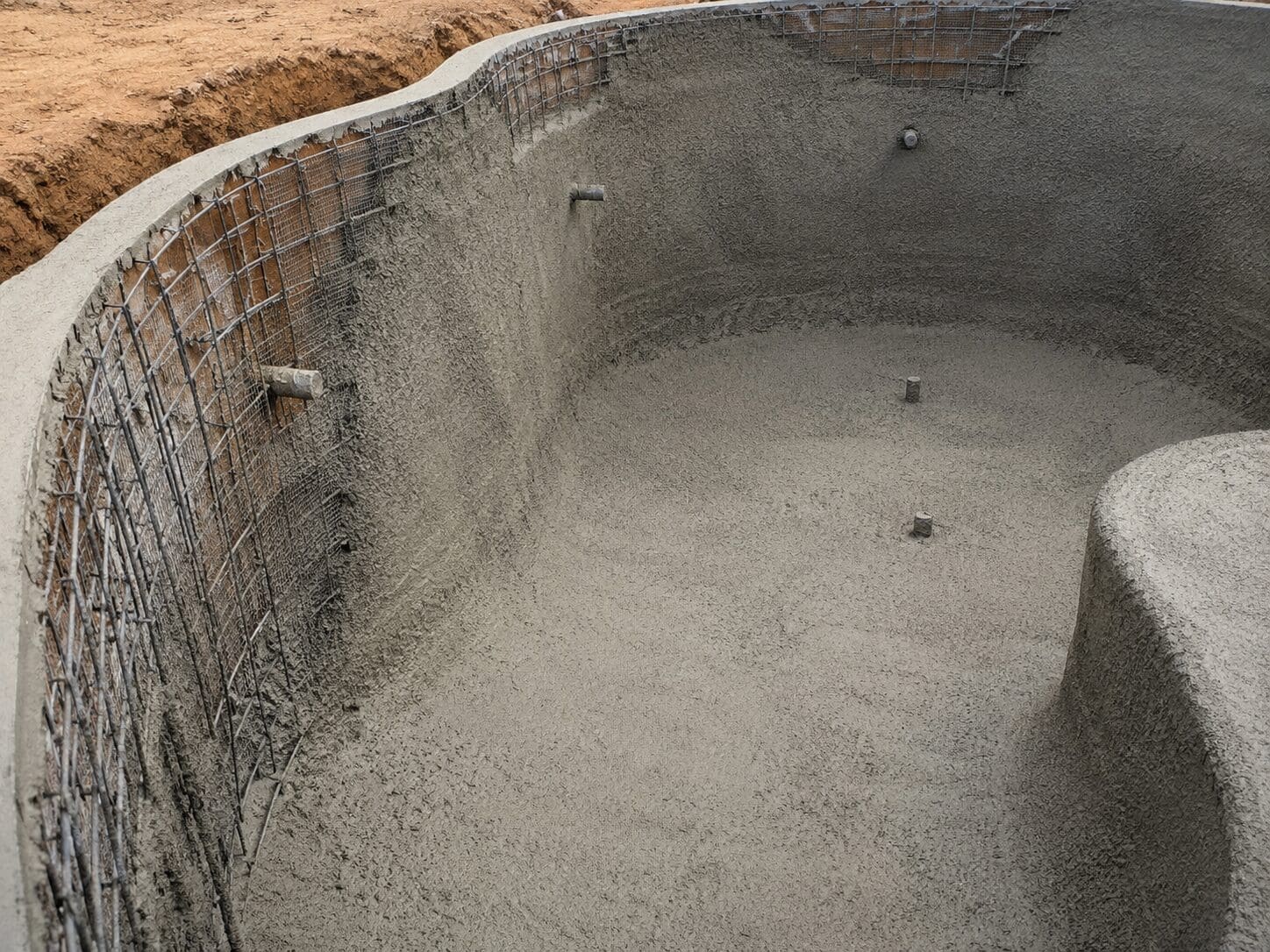
The gunite application itself is relatively fast. What follows is not. A freshly applied gunite shell needs to cure, and that curing process typically runs two to four weeks depending on temperature, humidity, and conditions during the cure period.
During curing, the shell is wet down regularly to support a strong cure. The pool clearly looks like a pool at this point, but it is not yet ready for interior finishes or water. This is often the most difficult phase for homeowners to wait through, and it is also one of the most important. A properly cured shell is what gives a gunite pool its structural durability and longevity. Shortening this phase to save time is not a trade worth making.
How Long Do Interior Finishes Take?
Interior finishing, whether plaster, aggregate, or tile, typically takes one to two weeks. Projects with more extensive tile work, particularly custom tile details throughout the pool rather than just at the waterline, take longer.
This is the phase where the pool begins to look finished, and it is one of the more satisfying parts of the build for most homeowners to watch come together.
How Long Do Equipment Installation and Decking Take?
Equipment installation runs roughly one week for most standard builds. Decking varies considerably based on the material, the square footage, and the scope of what is being built around the pool.
Decking and surrounding landscaping are worth planning and sequencing early. Trying to add significant hardscape or landscaping after the pool is complete, without having planned for it in advance, can add weeks to the overall project.
How Long Does Pool Startup Take After Construction?
Startup takes approximately one week. The pool is filled, water chemistry is balanced through a specific startup sequence, and the equipment is run through to confirm everything is operating correctly. During this period the pool cannot be used. Once startup is complete and chemistry is balanced, you are ready to swim.
What Can Delay Pool Construction?
The most common sources of delay are permit review timelines, weather, and site conditions discovered during excavation.
Permit review is the factor with the least flexibility once the process is underway, which is why submitting applications early matters so much. Weather delays are normal and are built into how we schedule the project. Rain during certain phases, particularly excavation and gunite application, can pause work temporarily.
Subsurface conditions, including rock, unexpected soil variation, or buried debris, can create delays during excavation. These are impossible to predict with certainty before the ground is opened, which is why a site assessment and realistic contingency planning are part of every well-managed project.
What Is the Fastest Type of Inground Pool to Build?
From a pure construction standpoint, a prefabricated pool with a fixed shape and size that is installed in a pre-excavated hole has a shorter on-site build timeline. That shorter timeline comes with tradeoffs in design flexibility and customization.
A custom gunite pool takes longer because it is built in place, phase by phase, with each stage depending on the previous one being done correctly. That process is what produces a pool that is custom to your property, built to last for decades, and finished to exactly the specifications you chose.
The homeowners who are happiest with their pools over the long term are the ones who built for the right reasons and planned for the right timeline.
Frequently Asked Questions
Can pool construction happen in fall or winter in Northern Virginia?
Parts of the construction process can proceed in fall, and in mild winters more is possible than most homeowners expect. However, Virginia does get genuine cold and occasional freezing temperatures that affect certain phases, particularly gunite application and curing. Most full builds are timed to begin in spring and complete before late fall. The planning and permitting process can and should happen year-round.
How long does pool plaster take to cure before swimming?
After interior plaster or aggregate is applied and the pool is filled, there is a startup period of approximately one week during which water chemistry is balanced and the equipment is commissioned. During this time the pool cannot be used. After startup is complete and water chemistry is within range, the pool is ready for swimming. Full plaster cure continues over the first month of use, and there are some maintenance guidelines specific to the startup period that we walk every homeowner through.
What happens if rain delays construction on my pool?
Rain delays are a normal part of construction in Northern Virginia. Certain phases are more weather-sensitive than others, including excavation and gunite application. Minor rain delays are typically absorbed without significantly affecting the overall schedule. Extended periods of rain during critical phases can push the timeline, but this is accounted for in how we plan and manage each project. We stay in communication throughout so you always know where the project stands.
Does a more complex pool design take longer to build?
Yes. A pool with elevated features like a vanishing edge, custom water features, integrated spa, beach entry, or extensive tile work involves more phases, more coordination, and more time than a standard pool shape with a simple finish. Complexity in the design is worth planning for in the timeline from the beginning rather than discovering mid-build that additional phases push the completion date.
What is the total time from first call to swimming?
For most custom gunite pool builds in Northern Virginia, the full timeline from initial consultation to finished water runs four to six months. Projects with more complex designs, challenging site conditions, or permit timelines on the longer end of the range may run closer to six months or slightly beyond. The homeowners who plan for the realistic timeline rather than the optimistic one consistently have the better experience.