

Pool Building Insights From Northern Virginia's Custom Gunite Experts
The Custom Pool Education You've Been Looking For.
How the Custom Pool Building Process Works From Start to Finish
| Quick Answer: A custom gunite pool build follows a defined sequence: initial consultation, design, permitting, excavation, steel and plumbing, gunite application and curing, interior finishes, equipment installation, and startup. From the first conversation to finished water, the full process typically takes four to six months. Each phase builds on the previous one, and the phases that seem like waiting, like curing and permit review, are where the long-term quality of the pool is actually being determined. |
One of the most common things I hear from homeowners before they build a pool is that they did not quite know what they were signing up for. Not in a bad way. They just did not have a clear picture of how the whole thing unfolds from the first conversation to the day they step into finished water.
That is what this post is for. I want to walk you through the full process, start to finish, so you can go into it with your eyes open. A gunite pool build has a lot of moving parts, but when you understand what each phase is and why it matters, the whole thing feels a lot less mysterious.
What Happens During the Initial Consultation?
Everything starts with a conversation. Before anyone draws anything or talks price, I want to understand your property, your goals, and what you are actually hoping to create. That means asking about how you plan to use the space, what your yard looks like, whether there are any constraints we need to work around, and what the experience you are after actually feels like to you.
A yard visit is usually part of this step as well. Seeing the site gives both of us a realistic sense of what is workable and starts narrowing the design direction. This is also where we identify anything that might affect scope, like setbacks, grade changes, or access for equipment.
How Does the Pool Design Phase Work?
The design phase is where the project takes shape before anyone touches your yard. For a custom gunite pool, this means working through the shape, size, depth, and features that are specific to your property and your goals. You are not picking from a catalog of preset models. You are designing something original.
Depending on the scope, this can involve 3D renderings, detailed plan sets, and specifications for finishes, equipment, and surrounding elements like decking or water features. More complex projects with elevation changes or integrated features take longer to develop.
Getting the design right before construction starts saves a significant amount of time and cost later. Changes made on paper are easy. Changes made during construction are not.
What Does Pool Permitting Involve in Northern Virginia?
In Northern Virginia, a pool is a permitted structure, which means county approval is required before any ground is broken. We handle the permit submission process, but understanding what it involves helps set realistic expectations.
Permit requirements vary by county. Prince William County and Fauquier County each have their own review timelines and technical requirements. Plans need to meet setback requirements from property lines and structures, as well as electrical and barrier codes, including fencing.
Permit review typically runs six to ten weeks, and during peak spring season it can run longer. This is one of the primary reasons that starting the planning process earlier in the year almost always leads to a better outcome. There is no way to rush county review once applications are submitted.
What Happens During Pool Excavation?
Once permits are approved, excavation is the first major physical phase of the build. This is when the hole is dug to the depth and shape specified in the plans, and for most homeowners it is one of the most dramatic days of the entire project because the change to the yard happens fast.
In Northern Virginia, soil conditions vary considerably from property to property. Clay-heavy soil, which is common in much of Prince William and Fauquier counties, requires specific handling during excavation. The occasional presence of rock or other subsurface conditions can also affect how this phase proceeds, which is why a site assessment early in the planning process matters.
Depending on the size of the pool and the site, excavation typically takes a few days to a week.
What Are the Steel and Plumbing Phases?
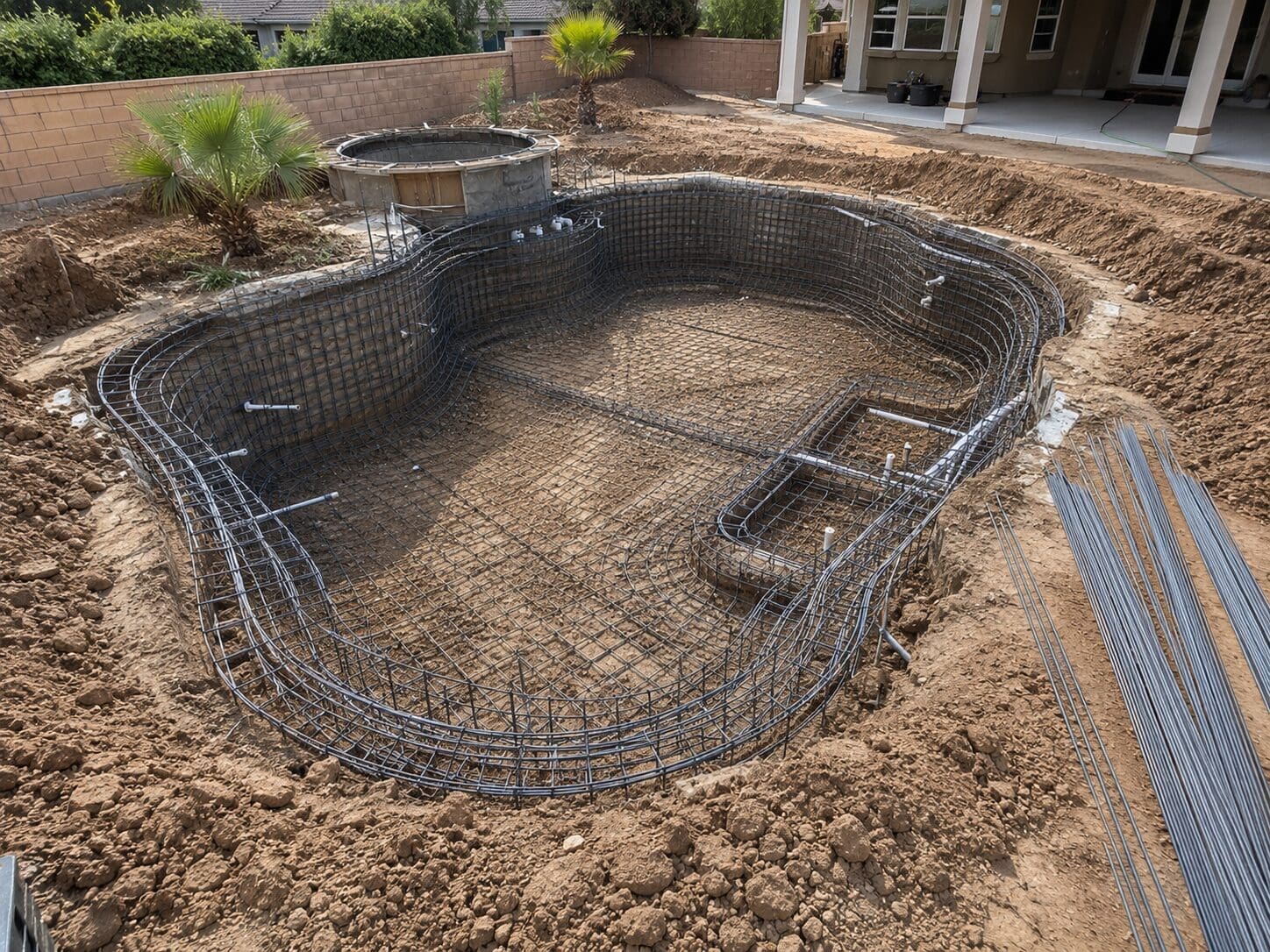
After excavation, the structural work begins. A reinforced steel framework, commonly called rebar, is installed to give the pool shell its strength and define its shape. The plumbing lines for returns, skimmers, drains, and any features like jets or water features are roughed in at this stage as well.
This phase typically takes one to two weeks. Precision matters here more than in almost any other phase, because the steel and plumbing form the internal structure that everything else is built around. There is no going back and correcting this work after the gunite goes on.
What Happens During Gunite Application and Curing?
Gunite, a pneumatically applied concrete mixture, is shot at high pressure over the steel framework to form the pool shell. The application itself happens relatively quickly. What takes time is the curing process that follows.
A gunite shell needs to cure properly, and that cannot be rushed. During this period, the shell is wet down regularly to support a strong cure. Depending on conditions, curing runs a few weeks.
Many homeowners find this the most difficult phase to wait through because the pool is clearly taking shape but is not yet usable. What is actually happening during this time is one of the most important parts of the entire build. A properly cured shell is what gives a gunite pool its longevity.
What Interior Finish Options Are Available for a Gunite Pool?
Once the shell has cured, interior finishing begins. There are three primary finish categories.
Plaster is the most traditional interior finish and comes in a wide range of colors. It is a smooth surface and is typically the most accessible option from a cost standpoint.
Aggregate finishes blend plaster with small stones or quartz, creating a more textured look with added depth of color. They tend to be more durable than standard plaster and are a popular choice for homeowners who want to extend the time between refinishing.
Tile can be used at the waterline and as decorative accents throughout the pool, including on steps, benches, and walls. Some homeowners also choose full tile interiors for a high-end look.
The finish you choose affects the look, feel, and long-term maintenance of the pool. This decision is worth thinking through during the design phase rather than leaving it to the end of the build.
What Equipment Is Included in a Gunite Pool Build?
Equipment installation covers the pump, filter, heater, and any automation or control systems. Equipment selection matters beyond brand preference. Properly sized equipment affects how the pool functions and what it costs to run and maintain over time.
Depending on the design, specialty equipment like variable speed pumps, salt systems, automated water chemistry monitoring, or lighting controls may also be part of the build. These are decisions made during the design phase and reflected in the plan set.
What Does Pool Startup Involve?
Before you are in the water, the pool goes through a startup process. This involves filling the pool, balancing water chemistry, and running through the equipment to confirm everything is operating correctly. Startup typically takes about a week, and during this period the pool cannot be used.
I walk every homeowner through how the systems work, what their ongoing maintenance responsibilities are, and what to expect in the weeks after startup. Starting with a clear understanding of how to care for the pool sets you up for a much better long-term ownership experience.
Do I Need to Be Home During Construction?
You do not need to be on site every day, but there are key decision points and milestone phases where your availability and input matter. The design phase requires active engagement. As the build progresses, questions may come up that benefit from a quick response. Your builder should be keeping you informed throughout, and you should feel comfortable asking questions at any stage of the process.
What Questions Should I Ask a Pool Builder Before Signing a Contract?
A few things worth asking before you move forward with any builder: How long have you been building gunite pools specifically in this region? Can you walk me through your typical timeline for a project like mine? Who handles permitting, and how do you keep me updated through that process? What does your warranty cover and for how long? Can I speak with homeowners who have been through a recent build with you?
The answers to those questions will tell you a lot about how the working relationship will go.
Frequently Asked Questions
Can I customize the shape and size of a gunite pool?
Yes. This is one of the core advantages of gunite construction. Because the pool is built on site rather than manufactured to preset dimensions, the shape, size, and depth profile can be designed around your specific yard and preferences. There are practical constraints based on your property and local setback requirements, but within those, the design is entirely custom.
Can a gunite pool have both a shallow end and a deep end?
Yes. A gunite pool can be designed with any depth profile, including a traditional shallow-to-deep configuration, a beach entry that gradually slopes from zero depth, a uniform depth throughout, or any combination that fits the intended use.
How many review rounds do homeowners typically have during the build?
At Relax Pools, we keep you informed throughout the process. Major decision points include design review, finish selection, and equipment review. During construction, we communicate as phases are completed and flag any site conditions that require your input. You are not handing the project over and waiting. You are involved at the stages where your input actually matters.
What decisions do I need to make before construction starts?
The major decisions, including pool shape and size, depth profile, interior finish, tile selection, equipment, decking materials, and any specialty features like water features or lighting, should all be finalized before ground is broken. Making these decisions during the design phase rather than during construction avoids delays and keeps the project on schedule.
What happens if I want to change something during construction?
Changes made after construction begins are more complicated and more costly than changes made during the design phase. Some changes are possible, some are not, and those that are possible often affect the timeline and budget. The best approach is to work through decisions thoroughly before construction starts so that changes during the build are the exception rather than the rule.
What should I expect my yard to look like during the build?
During construction, your backyard is an active worksite. There will be equipment, excavated material, open trenches during plumbing phases, and regular worker presence. Access for equipment is a real consideration, and some landscaping near the construction area will be affected. Most homeowners find this manageable once they know what to expect. The disruption is temporary, and the finished result is worth it.