

Pool Building Insights From Northern Virginia's Custom Gunite Experts
The Custom Pool Education You've Been Looking For.
Gunite vs. Fiberglass vs. Vinyl: Which Pool Type Is Right for Your Home?
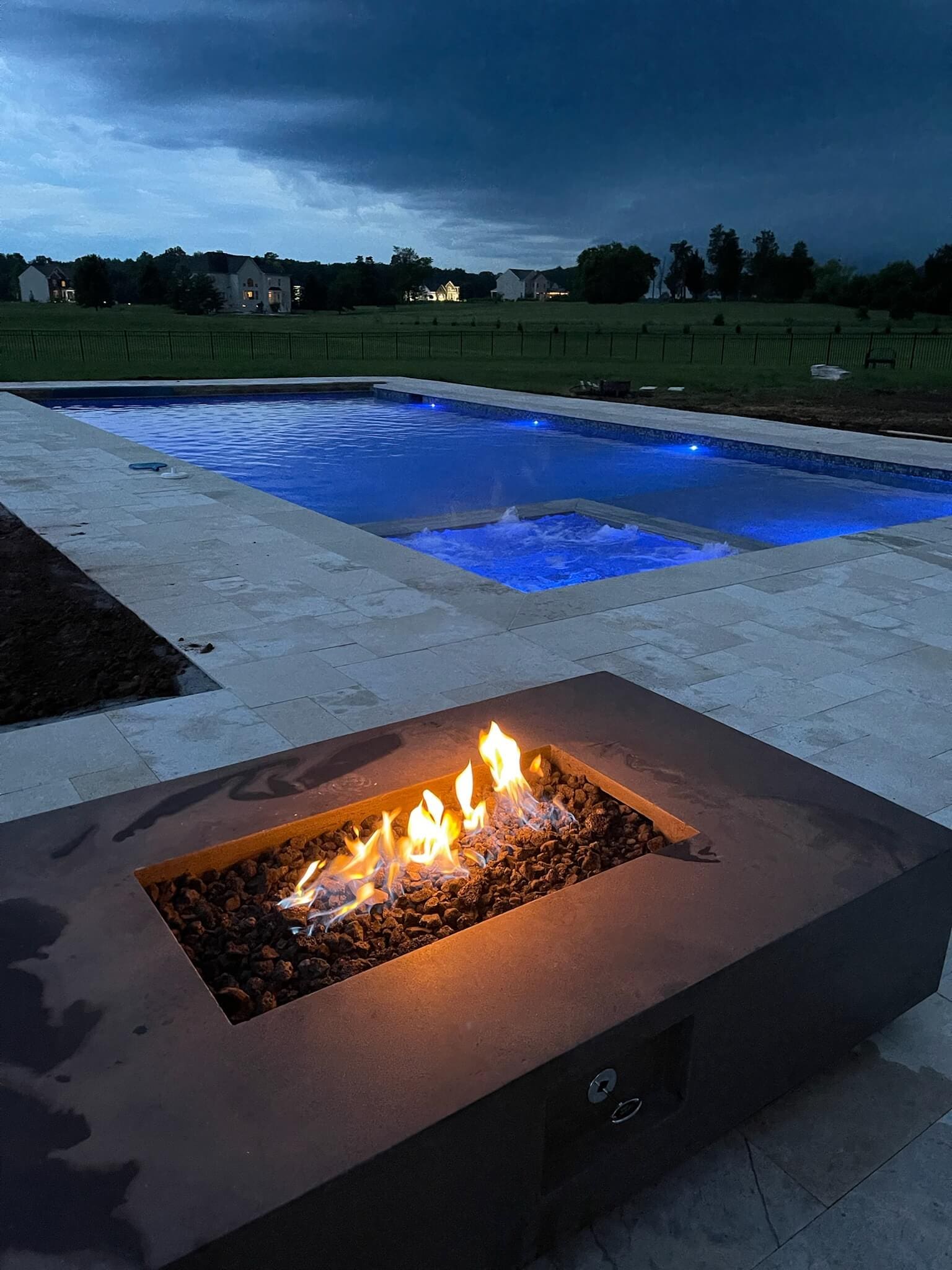
One of the first questions I get from homeowners who are seriously considering a pool is some version of this: “What’s the difference between all the pool types, and which one should I actually get?” It’s a fair question, and honestly, it deserves a straight answer.
There’s a lot of information out there on this topic, and some of it is genuinely helpful. Some of it is written by people who only sell one type of pool and have a clear incentive to make everything else sound inferior. I want to give you something more useful than that. I build gunite pools, and I also offer fiberglass pools. I don’t offer vinyl liner pools, but I’ll cover them fairly here too because some homeowners are a good fit for that product.
The goal of this post is to help you understand each option well enough to know which one fits your situation. Let’s walk through all three.
Gunite Pools
A gunite pool is a custom-built, reinforced concrete structure. Steel rebar is installed in the shape of your pool design and then a high-pressure nozzle is used to apply a dry concrete mix, combining with water at the point of application. The result is a dense, durable shell that is built entirely from scratch to your specifications.
No two gunite pools are the same. The shape, depth, size, and features are all determined by the homeowner in collaboration with the builder. Want a freeform design that follows the natural layout of your backyard? That works. Want a clean rectangular pool with a built-in spa, a tanning ledge, and a raised wall with a spillover? That works too. The construction method adapts to the design, not the other way around.
What gunite does well:
Complete design flexibility. You are not choosing from a set of available shapes or sizes. Your yard, your vision, your pool.
Structural longevity. A properly built gunite shell can last the lifetime of your home. The concrete and steel don’t degrade the way other materials do over time.
Ability to incorporate complex features. Water features, fire elements, sun shelves, raised spas, beach entries, and custom depth profiles are all natural fits for gunite construction.
Refinishing flexibility. When the time comes to update the interior surface, a gunite pool can be replastered or refinished with a wide range of materials and finishes.
What to know going in:
Gunite pools cost more upfront and take longer to build than the alternatives. The interior surface will need to be refinished periodically over the life of the pool. Water chemistry maintenance matters more with a plaster or pebble finish than with some other surface types, so staying consistent with your chemical balance is important.
For homeowners who are making a long-term investment and want a pool that is entirely their own, gunite is typically the right answer. It’s the reason I focus on it as the core of what I do.
Fiberglass Pools
A fiberglass pool starts life in a manufacturing facility, where a mold is used to produce a one-piece shell from layers of fiberglass and resin. That shell is then transported to your property and set into an excavated hole. Plumbing and equipment are connected, the surrounding area is backfilled and finished, and the pool is ready to fill.
The installation process moves quickly compared to gunite because the shell itself arrives complete. Most of the time between excavation and water is spent on finishing work rather than waiting for a structure to cure.
What fiberglass does well:
Faster installation timeline. For homeowners who are working with a specific seasonal deadline or who simply want to get in the water sooner, fiberglass has a clear advantage.
Smooth surface. The gelcoat finish on a fiberglass shell is nonporous and smooth, which is comfortable underfoot and generally easier to keep clean.
Lower ongoing chemical demand. Because the surface is nonporous, fiberglass pools tend to be more forgiving when it comes to water chemistry maintenance.
Established durability. A quality fiberglass pool from a reputable manufacturer holds up well and gives homeowners years of reliable use.
What to know going in:
Fiberglass pools come in set shapes and sizes because each pool is produced from a fixed mold. You’re selecting from what’s available rather than designing from scratch. For homeowners with an unusually shaped yard, specific dimensional requirements, or a very custom vision, the available options may or may not align. The gelcoat surface can fade or oxidize over time and may eventually need to be refinished, though this timeline varies significantly based on water chemistry and product quality.
We offer fiberglass pools at Relax Pools because we recognize that for the right homeowner, it’s a smart choice. If a fiberglass pool fits your goals better than a gunite build would, that’s a conversation worth having.
Vinyl Liner Pools
A vinyl liner pool is built using a supporting frame, typically made of steel, polymer, or aluminum panels, that forms the walls of the pool. A custom-cut vinyl liner is then fitted over the frame and floor, creating the water-holding surface. The liner is what you see and touch when you’re in the pool.
Vinyl liner pools have been around for a long time and remain a popular choice in many parts of the country. They offer a lower entry cost than gunite or fiberglass and can be installed in a reasonable amount of time.
What vinyl does well:
Lower upfront cost. For homeowners with a tighter budget who want a backyard pool, vinyl liner construction typically comes in at a lower price point than the other two options.
Smooth surface. Like fiberglass, vinyl is smooth and comfortable underfoot.
Design flexibility within limits. Vinyl pools offer more shape options than fiberglass because the liner is cut to fit. The structural framework still sets some boundaries, but there is more room for customization than a fixed fiberglass mold allows.
What to know going in:
The liner is the part of a vinyl pool that requires the most ongoing attention. Liners can be punctured, torn, or degraded by sun exposure and chemical imbalance. Over time, typically somewhere in the range of ten to fifteen years depending on conditions and care, the liner will need to be replaced. That replacement is a real cost to plan for. Sharp objects and pet claws are also a consideration that fiberglass and gunite owners don’t have to think about.
I don’t offer vinyl liner pools, so if that’s the direction a homeowner wants to go, I’ll point them toward someone who does. What I can tell you from years in this industry is that vinyl liner pools are a reasonable fit for certain homeowners and certain budgets, and they’re not the right fit for others. Understanding what you’re committing to upfront matters.
How to Think Through the Decision
After walking through the basics, the question becomes: how do you actually decide? Here are the things I’d encourage any homeowner to think through honestly.
What does your backyard actually look like?
Yard size and shape matter a great deal. If you have an unusual lot, a tight space, a significant slope, or a design that needs to work around existing structures, gunite is the most adaptable option. If your yard is a relatively standard size and a shape from the fiberglass catalog fits naturally, fiberglass becomes much more competitive. Site conditions drive this decision more than most homeowners realize at the start of the process.
What features matter to you?
If your vision includes a lot of custom features, the design freedom of gunite is genuinely hard to replicate. If you want a clean, functional pool with moderate features and the available fiberglass models suit your taste, you may not need to go the custom route. It’s worth getting specific about what you actually want in a pool before deciding which construction method is necessary to achieve it.
How long are you planning to stay in this home?
This comes up more than you’d think. If you’re planning to be in your home for twenty or thirty years, the long-term durability and refinishing flexibility of a gunite pool becomes a more compelling value proposition. If you’re thinking about selling in the next several years, a well-chosen fiberglass pool may actually make more sense from a return-on-investment perspective. There’s no universal right answer here. It depends on your situation.
What is your actual budget?
Be honest with yourself about this one. Gunite is the premium option. If the budget is genuinely limited and a gunite build would require stretching further than is comfortable, it’s worth having a candid conversation about what fiberglass can offer. A pool you can afford and enjoy is better than a pool that creates financial stress. I’d rather help someone get into the right pool at the right budget than oversell a project that doesn’t fit.
A Note on Quality Within Each Category
Something that doesn’t get said often enough: the quality within each pool type varies significantly depending on who builds it. A well-built fiberglass pool from a quality manufacturer installed by a professional outperforms a poorly built gunite pool every single time. The construction method sets the ceiling on what’s possible, but execution determines where you land within that range.
When you’re evaluating builders, look at their portfolio of completed work. Ask about their process. Find out who is actually doing the work on your project. A lot of pool companies sell the project and subcontract the build. That’s not inherently bad, but you should know what you’re getting and who is accountable for the end result.
In Northern Virginia, I’d also encourage you to work with someone who knows how to build for this region specifically. Our soil conditions, our winters, and the particular characteristics of lots in communities throughout Prince William and Fauquier Counties all factor into how a pool should be designed and built. Local experience matters in ways that aren’t always obvious until something goes wrong.
The Short Version
If you want maximum design flexibility and a structure built to last a lifetime, gunite is the right choice. If you want a quality pool with faster installation, lower chemical maintenance, and a price point that works for your budget, fiberglass deserves a real look. If budget is the primary driver and you’re comfortable with the long-term maintenance requirements, vinyl liner is a legitimate option worth exploring with a builder who specializes in it.
What I don’t believe in is telling every homeowner that only one answer is right. The best pool for your home is the one that fits your yard, your vision, your timeline, and your budget. My job is to help you figure out which one that is.
If you’re in Gainesville, Haymarket, Bristow, Warrenton, Manassas, or anywhere in the surrounding Northern Virginia area and you want to talk through your options, I’m happy to have that conversation. No pressure. Just a straightforward discussion about what makes sense for your home.
Reach out to schedule a consultation and let’s figure out the right fit together.